• About
    • History
    • Notable Sales
    • Why Beare’s?
    • Managing Director
    • The Team
    • Global Advisory Board
    • J & A Beare Europe GmbH
    • Sponsorships & Partnerships
  • Buying & Selling
    • Buying from Beare’s
    • Selling through Beare’s
    • New Makers
  • Expertise
    • Valuations & Appraisals
    • Certificate of Authenticity
    • Repairs & Restorations
    • Scientific Research & Conservation
  • Beare’s Society
    • The Society
    • So-Ock Kim – Artistic Coordinator
    • Taro Sumitani – Senior Advisor, Japan
  • Projects
    • J & A Beare Cultural Trust
    • The Beare’s Stradivari Price Index
    • Album release: “12 Stradivari”
    • Book release: “Antonio Stradivari, The Complete Works”
    • Documentary film: “Falling for Stradivari”
  • News
  • Contact
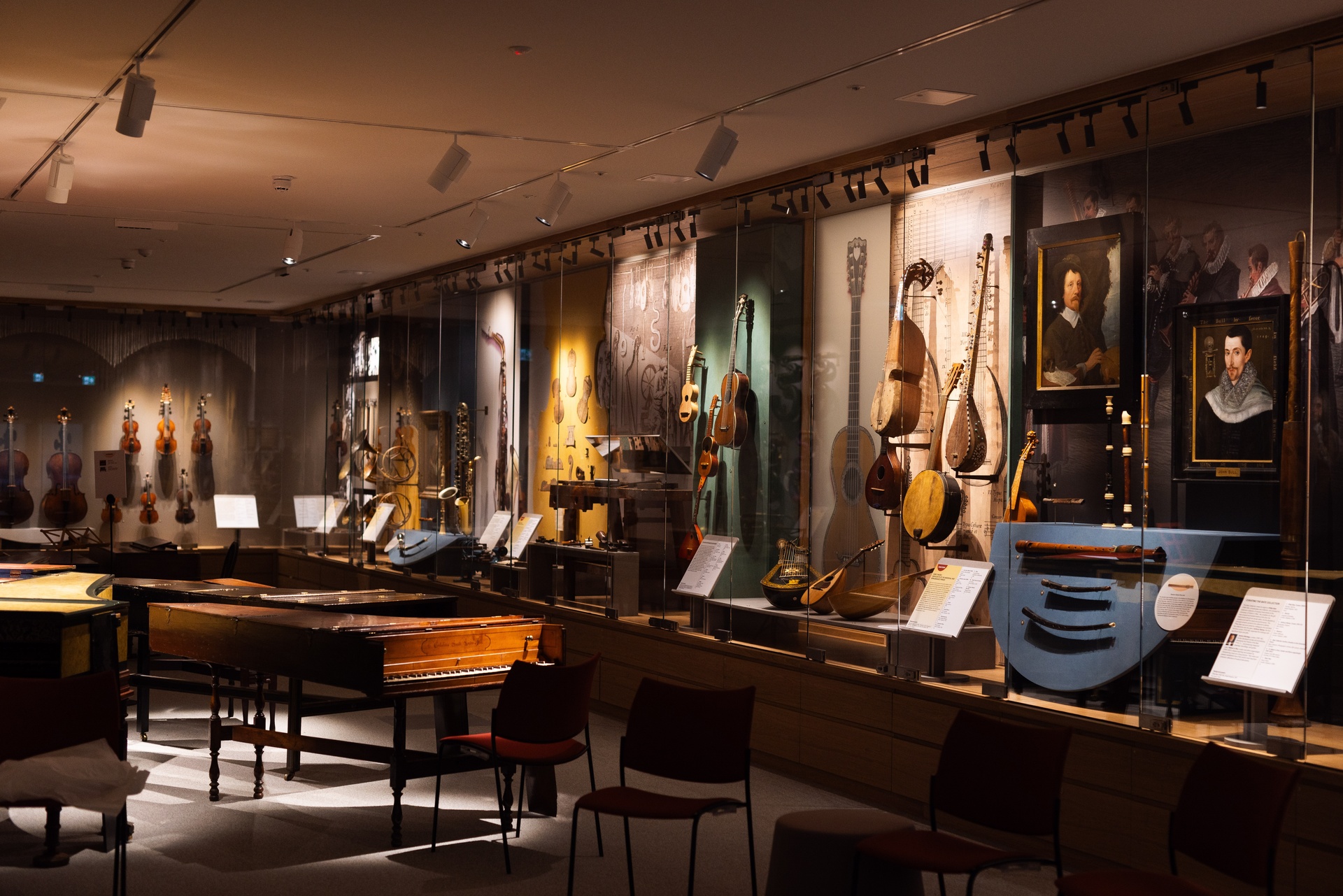
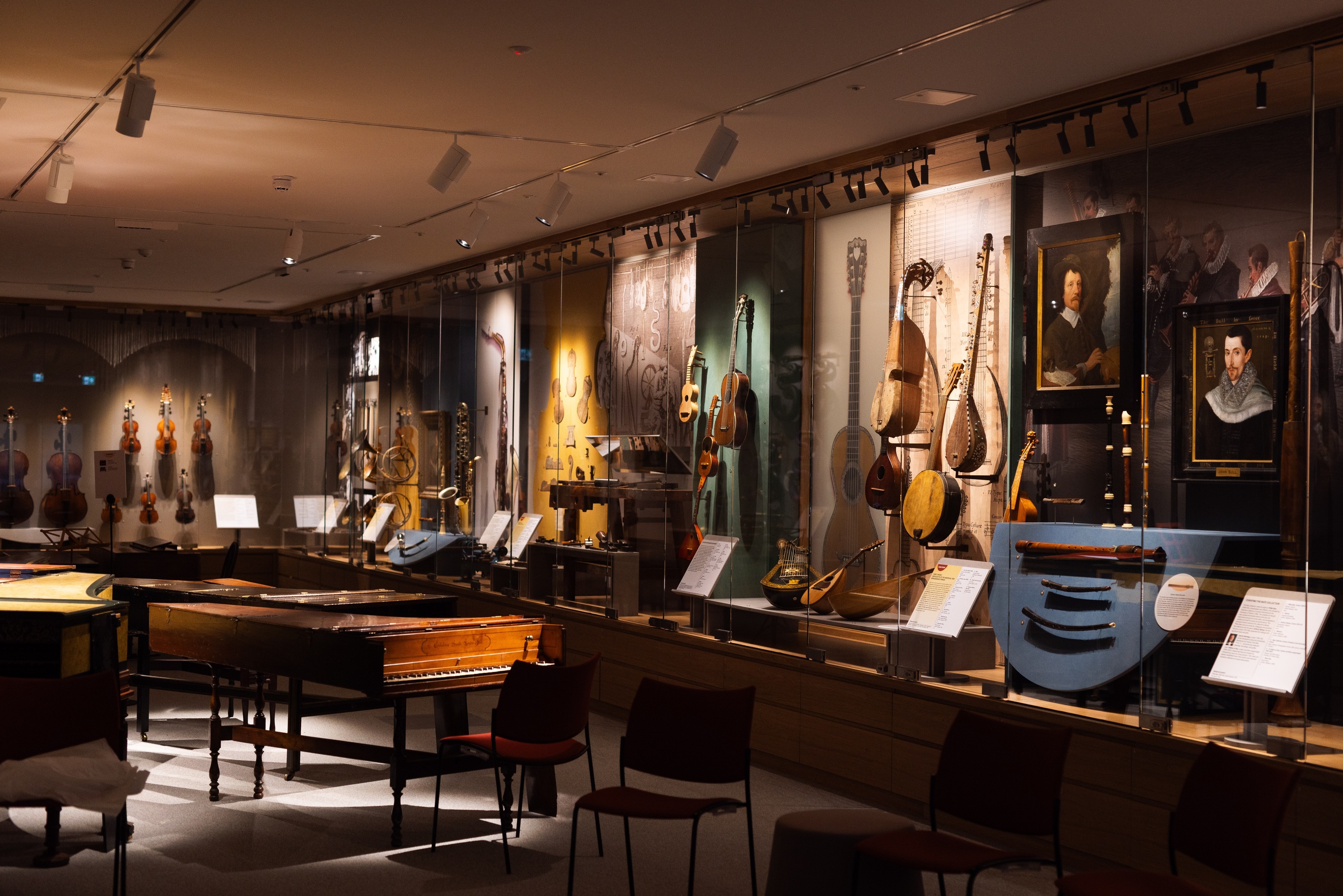
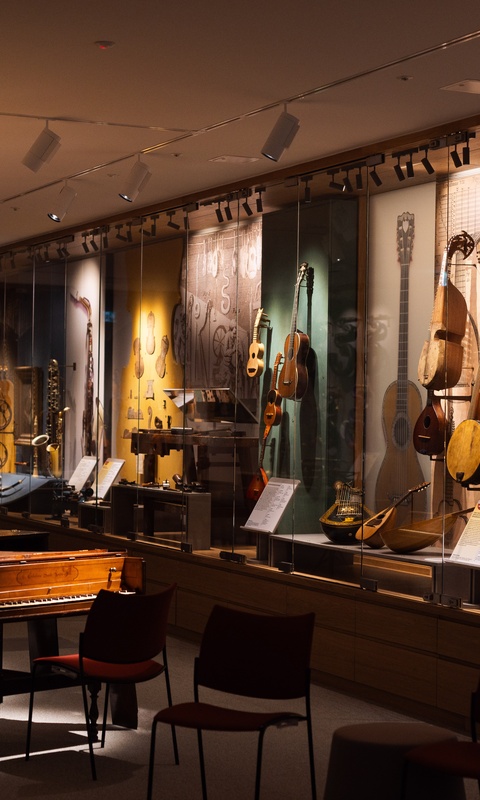
Oxford University Bate Gallery interiorOxford University Bate Gallery interior

Introducing our new partnership with Oxford University Music Faculty

Three questions with Professor Laura Tunbridge, Heather Professor of Music and Oxford University's Music Faculty Chair

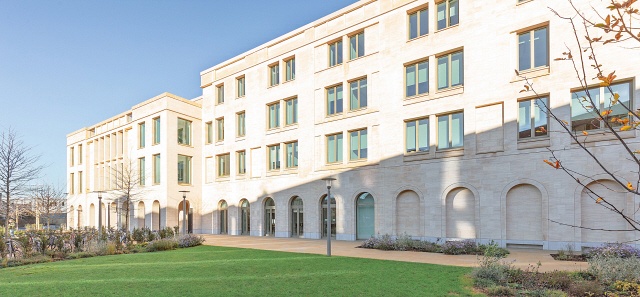
Something significant is happening in Oxford. The Steven A. Schwarzman Centre for the Humanities has just opened its doors, and with it, one of the most ambitious experiments in connecting academic and artistic life that the UK has seen in a generation. Seven humanities faculties, world-class performance spaces, and one of the country’s most important collections of historical instruments are now operating under a single roof, with a mandate to make these resources speak to each other, and to the wider world.

J & A Beare is proud to be part of this from the outset. We are partnering with the University’s Music Faculty, contributing our expertise in fine instruments to the Faculty and the world-class musicians they work with, as well as to the broader conversation around conservation and historical research into these remarkable objects.

We asked Professor Laura Tunbridge, Heather Professor of Music and Music Faculty Chair, how she sees the Centre’s work shaping chamber music and the classical music world more widely.

Laura, your new book, Chamber Music: A Very Short Introduction, looks at the invisible connections between chamber musicians and how individual players come together to create something bigger than themselves. How does academic research help musicians play better and more meaningfully?


Professor Laura Tunbridge

“Music is an art primarily experienced in the here and now of a performance. It can seem as if the way a piece is played and valued today is the way it has always been. But there is, of course, a long history of chamber music and being made aware of past contexts can help to shape musicians’ understanding of repertoire and performance practices: from which composers are played most often, to the spaces in which they concerts are given.

Opening out discussion about these issues can give musicians fresh ideas for programming and interpretations, while academic research into the psychology of ensemble performance can also help to explain how musicians work together. And, of course, this is a two-way process – academics learn a great deal from players as well.”

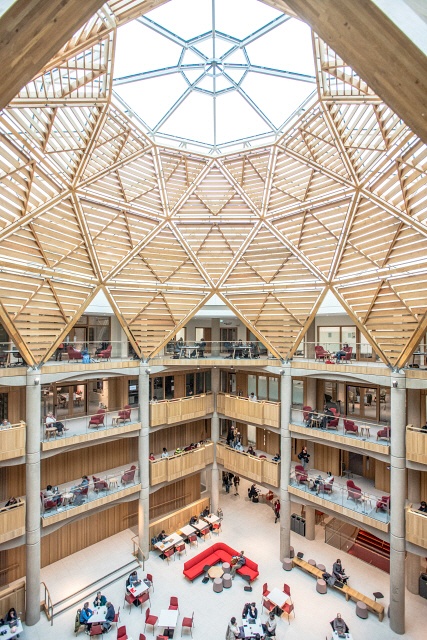
Roof detail and seating area below inside the Schwarzman Centre

The Schwarzman Centre brings together seven humanities faculties alongside libraries, collections, a cinema, music, theatre and performance spaces. How do you see these different worlds learning from each other and what sort of approaches will make this possible?

“The open spaces in the Centre make interaction, whether spontaneous or planned, very natural. Students and researchers from different faculties are working together side by side in the library and study spaces, and activities in the music studios and rehearsal rooms can spill out to be shared in the performance spaces.

The interdisciplinary nature of the Centre’s Cultural Programme, led by Artistic Director John Fulljames, will be key in bringing together the humanities facilities to partner on new, public-facing presentations that also involve world-class professional creatives. For example, the Day of Psalms on 28th November will combine public presentations of work from academics and students spanning Music, History, Theology, Languages, Literature and Philosophy to explore the psalm in its manifold forms. Performances of Bernstein’s Chichester Psalms by the Aurora Orchestra and BBC Singers and Steve Reich’s Tehillim by the Colin Currie Group will also form part of the programme.“

Wide-angle shot of the Schwarzman Centre for the Humanities

The Centre is home to the Bate Collection which contains over 1000 historical instruments and is a deeply rich resource for students, academics and professional musicians alike. J & A Beare will help to restore some of the Bate’s violins to full playing condition. What difference does it make, to you and your students, to have these instruments within reach?

“Having access to historical instruments of this quality is transformative for the Faculty. They enable so much of our work to come alive, be that performance practice, historical investigations into the social conditions surrounding music development, musical analysis, composition…the list goes on! Importantly too, they allow us to connect with the public in a deeply meaningful way, including school pupils through the Bate’s Outreach and Education programmes. Enabling children from a young age to have such hands-on experience of musical instruments is invaluable. More generally, understanding the historical and social context in which instruments were made, and the people who played and wrote for them, is incredibly enlightening and inspiring.

The Bate Collection plays a key role in the Faculty’s engagement with professional musicians, who really consider the Bate to be a treasure trove of instruments that help them understand their practice on a much deeper level. We are thrilled to be partnering with J & A Beare on the restoration of our violins in particular, which includes, purportedly, the first English-made violin from 1641 by Jacob Rayman. The first violin that will be worked on by Robert Brewer Young is a fine 19th-century instrument that we thought was made by Vuillaume – but Robert’s initial inspection has changed our thinking on this. So this will require some historical detective work by the Bate academics, as well as Beare’s expert restoration skills!”

Oxford University Bate Gallery interior

Pre-order your copy

Chamber Music: A Very Short Introduction

Cover of Chamber Music: A Very Short Introduction

Professor Laura Tunbridge’s upcoming book, Chamber Music: A Very Short Introduction, is due for release later this year, forming the latest in the popular ‘Very Short Introduction’ series from Oxford University Press.

Be the first to get your hands on a copy by pre-ordering today.

Pre-order today
  • About Us
    • About J & A Beare
    • Privacy Policy
    • Terms of Use
    • FAQ’s
    • Contact
  • Services
    • Buying
    • Selling
    • Valuations
    • Certificate of Authenticity
    • Repairs & Restorations
  • Find us on
    • Facebook
    • Instagram
    • Twitter
    • Linkedin
    • YouTube

London

30 Queen Anne Street

London

W1G 8HX

T: +44 (0)20 7307 9666

E: violins@beares.com

Europe

Im Mallen 6

27318 Hoyerhagen

Germany

T: +49 4251 983 5844

E: beares-europe@beares.com

Site By Propeller