In the 1720s, Luigi Tarisio made a living doing something that would make modern conservators shudder: travelling through Italy’s forgotten houses and churches, buying up neglected instruments for next to nothing, and selling them in Paris. He was notorious for it. It was said he had “emptied the attics of Italy,” to the great delight of Parisian music enthusiasts. One of those rescued instruments was a violin made in Cremona in 1722. Tarisio sold it to Jean-Baptiste Vuillaume, the renowned Parisian dealer. Vuillaume sold it to a French count. That transaction, somewhere in the middle of the 19th century, is where this story properly begins.
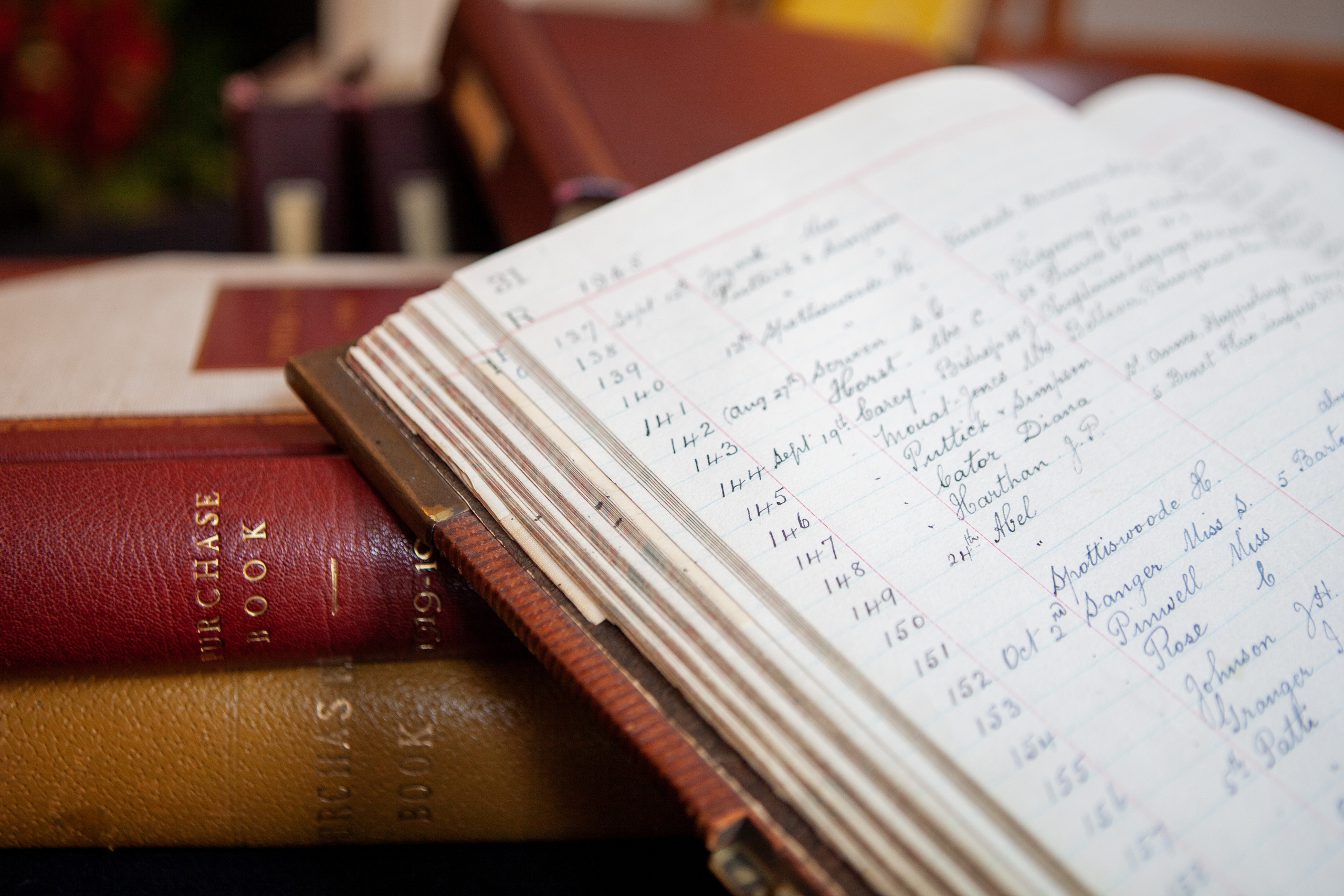
Spotlight on the 1722 "De Chaponay" Stradivari
A Violin That Followed History
Lyon, mid-19th century
France in the 1850s was a country reinventing itself. Napoleon III had seized power in a coup and declared the Second Empire, and Paris was being physically transformed under Baron Haussmann, its medieval streets torn up and replaced with the wide boulevards we recognise today. It was a moment of conspicuous confidence: grand opera houses, glittering salons, an appetite for beauty and display that extended to the finest instruments money could buy.
Lyon, 200 kilometres to the south, was thriving in its own right. As the silk capital of Europe, it had produced a merchant class of considerable wealth and sophistication, and it was here that Count Alexandre-Henri de Chaponay kept his remarkable collection. He was an aristocrat whose love of music was serious enough to be taken seriously. He owned between thirty and forty instruments, all by the great makers, including two Stradivaris and a Guarneri del Gesù. The 1722 violin was the crown jewel. Its voice rang out in the elegant salons of a city that still believed the old world was very much intact.
It wasn’t, of course. Industrialisation was reshaping Europe from the ground up, and the old aristocracy was beginning to lose its footing. New wealth was emerging, born from factories and railways and trade rather than land and title. When the violin passed from de Chaponay’s collection to that of a silk merchant, François Boutard, it was a small but telling sign of the times. The instrument was crossing a threshold that much of Europe was crossing alongside it.
London, 1887
By 1887, the violin had crossed the Channel into a city at the peak of its confidence. Victorian London was the capital of a global empire, its docks handling goods from every corner of the world, its financial institutions setting the terms for international trade. The Queen had just celebrated her Golden Jubilee. The mood was one of extraordinary self-assurance, and the appetite for beautiful things was part of that confidence.
W.E. Hill & Sons, the most respected violin dealers in London, acquired the instrument and sold it promptly to Dr George W. MacKenzie, an amateur player. MacKenzie kept it until 1903, when Hills re-acquired it and sold it on to Charles James Oldham of Brighton, a surgeon with an unusually specific ambition: he was determined to assemble a complete quartet of Stradivaris, and he succeeded. As a director of the Royal Academy of Music, he initially expressed a wish to bequeath the quartet to the British Museum, a gesture entirely in keeping with the Victorian sense of civic duty. He was dissuaded by the Royal Academy itself, and when he died in 1907, the collection was dispersed by the Hills.
Before that happened, however, the de Chaponay had already moved on. In 1904, Oldham sold it to Robert Brandt, a collector whose family fortune came from the sugar trade. Brandt kept it for only a few months before returning it to the Hills.
Berlin, early 20th century
The early years of the 20th century were, briefly, a remarkable time to be in Berlin. The German Empire had emerged from the Franco-Prussian War as the dominant force on the continent, and Berlin had grown into a city of genuine cultural ambition. Its concert halls and opera houses rivalled those of Vienna and Paris. There was a sense, in certain circles, that Europe’s future was being shaped here.
Into this world came Dr Felix Landau, a lawyer and an amateur violinist of genuine accomplishment. He played both the Brahms sextets and the Schubert quintet, and had studied under the legendary Joseph Joachim, the great Hungarian-German violinist who had been a close friend of Brahms himself. Landau was, in short, exactly the kind of owner a Stradivari deserves: someone for whom the instrument was not a trophy but a companion.
But the confidence of that era curdled quickly. The First World War shattered the old European order, and the Weimar Republic that followed was a period of brilliant, anxious creativity, haunted by inflation, political violence and a sense of impending catastrophe. When the Nazi regime finally took hold in the 1930s, the world that Landau had inhabited ceased to exist. He sent the violin to London for safekeeping with W.E. Hill & Sons. His son Hans Helmuth was forced to flee Germany as a refugee. The violin waited out the war in London. It is one of the quieter details of this story, but not an insignificant one.
New York, 1949
The Europe that emerged from the Second World War was exhausted and diminished. Entire cities had been reduced to rubble. Old certainties about culture, civilisation and progress lay in ruins alongside them. The United States, by contrast, had emerged from the war with its infrastructure intact, its economy booming and a new sense of global purpose. The Marshall Plan was rebuilding Western Europe, but the centre of gravity, financial and cultural, had unmistakably shifted west.
Many of the world’s finest instruments followed that shift. Hans Helmuth Landau and his sister Margaret Abraham arranged the sale of the de Chaponay through Emil Herrmann, one of New York’s most eminent violin dealers, to the celebrated collector Henry Hottinger, co-founder and partner of Wertheim & Co. on Wall Street. New York in the late 1940s was a city intoxicated with possibility: jazz clubs, abstract expressionism, the United Nations taking shape on the East River. It was also a city with an appetite for the cultural inheritance of old Europe, and the means to acquire it. The Hill brothers, watching from London, noted the trend with some regret, remarking that it was fuelled by new fortunes on Wall Street, as Americans eagerly acquired the legacy of the old world.
Hottinger kept the violin until 1965, when it passed to Laurence Homolka of California through Rembert Wurlitzer, another of New York’s leading dealers. Then, in 1978, it moved through a third, Jacques Français, who sold it to the violinist Daniel Heifetz. It is worth noting that point: Heifetz was the first recorded professional player ever to have owned the de Chaponay. For an instrument of this distinction, that is a surprisingly long wait. Since then, the violin has passed into private hands.
The instrument itself
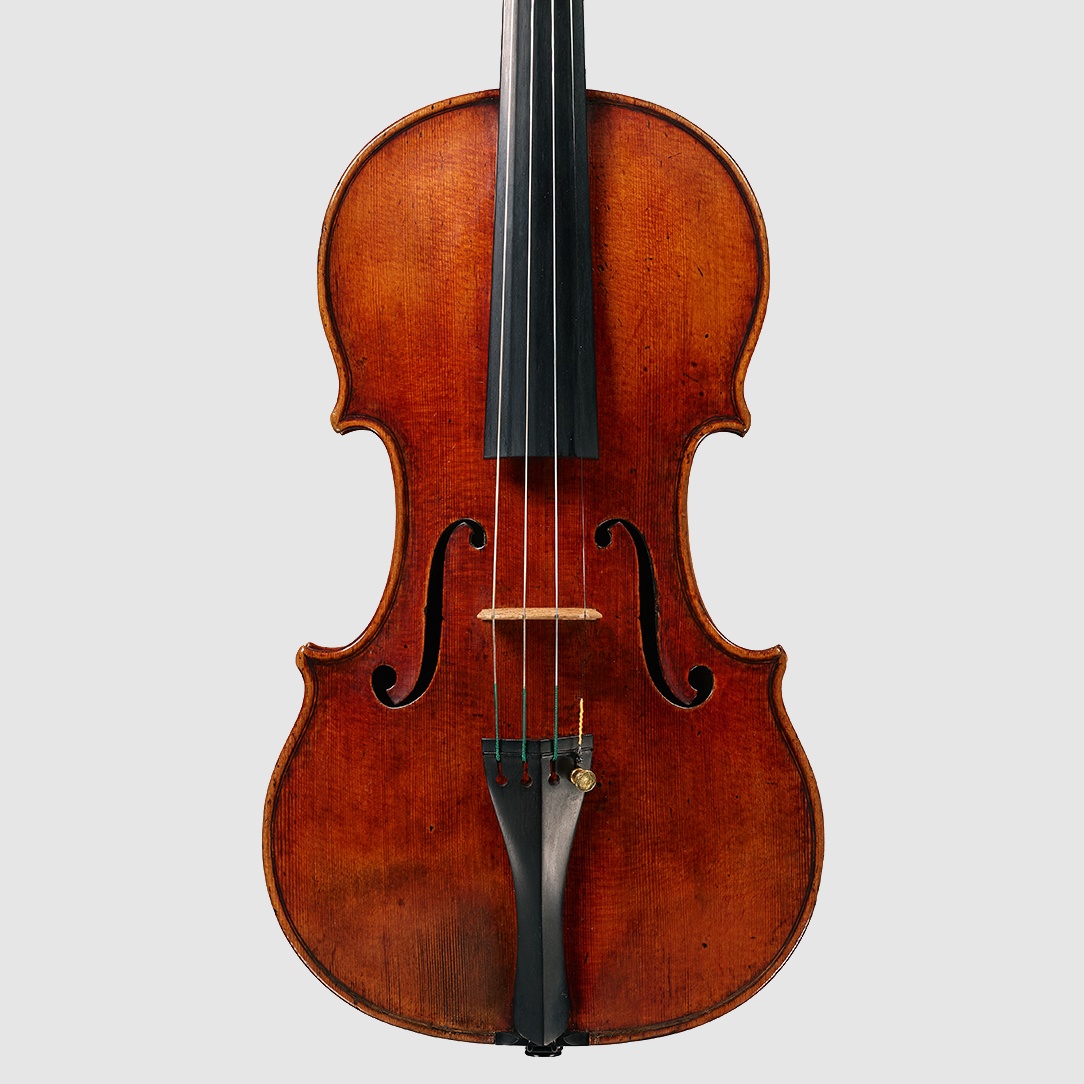
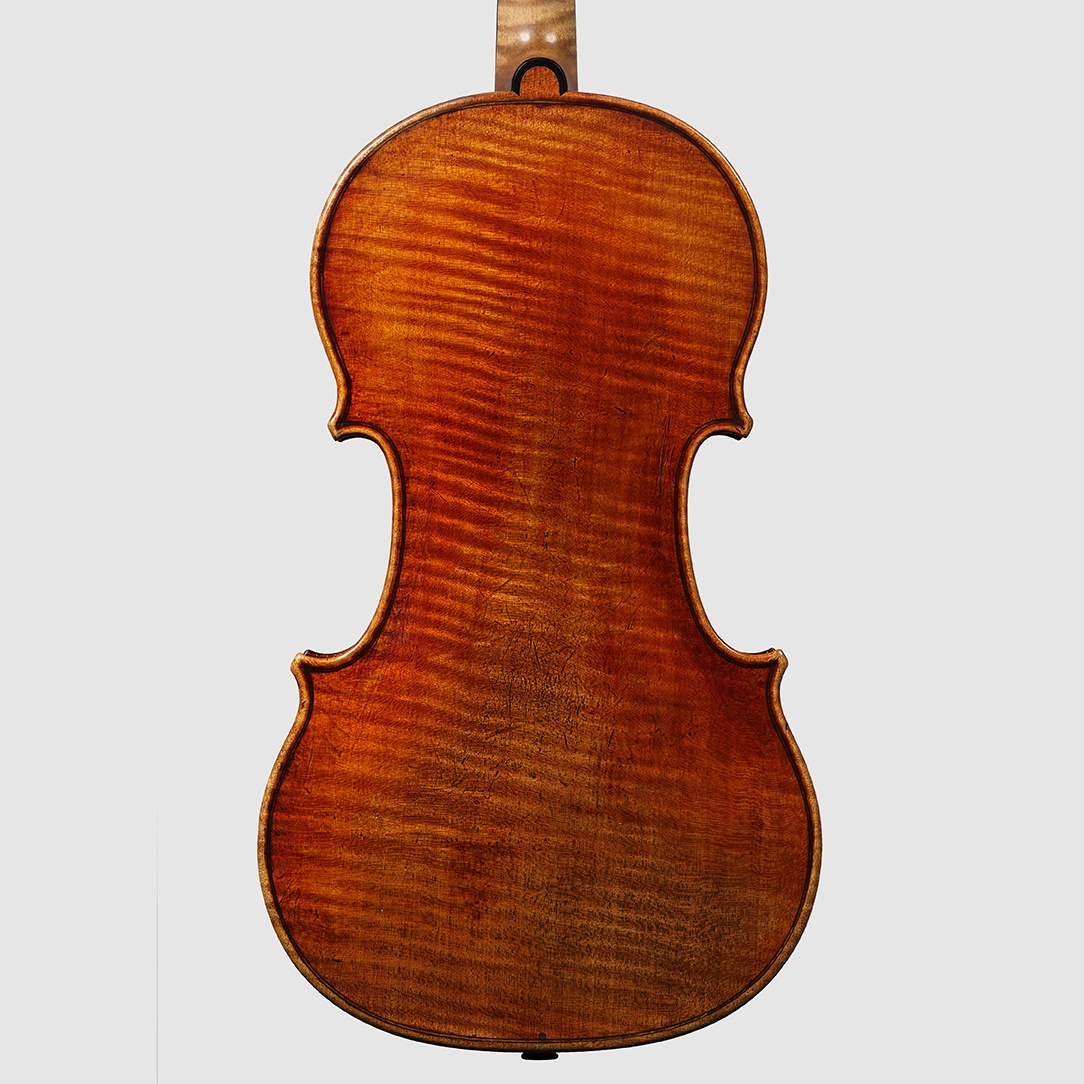
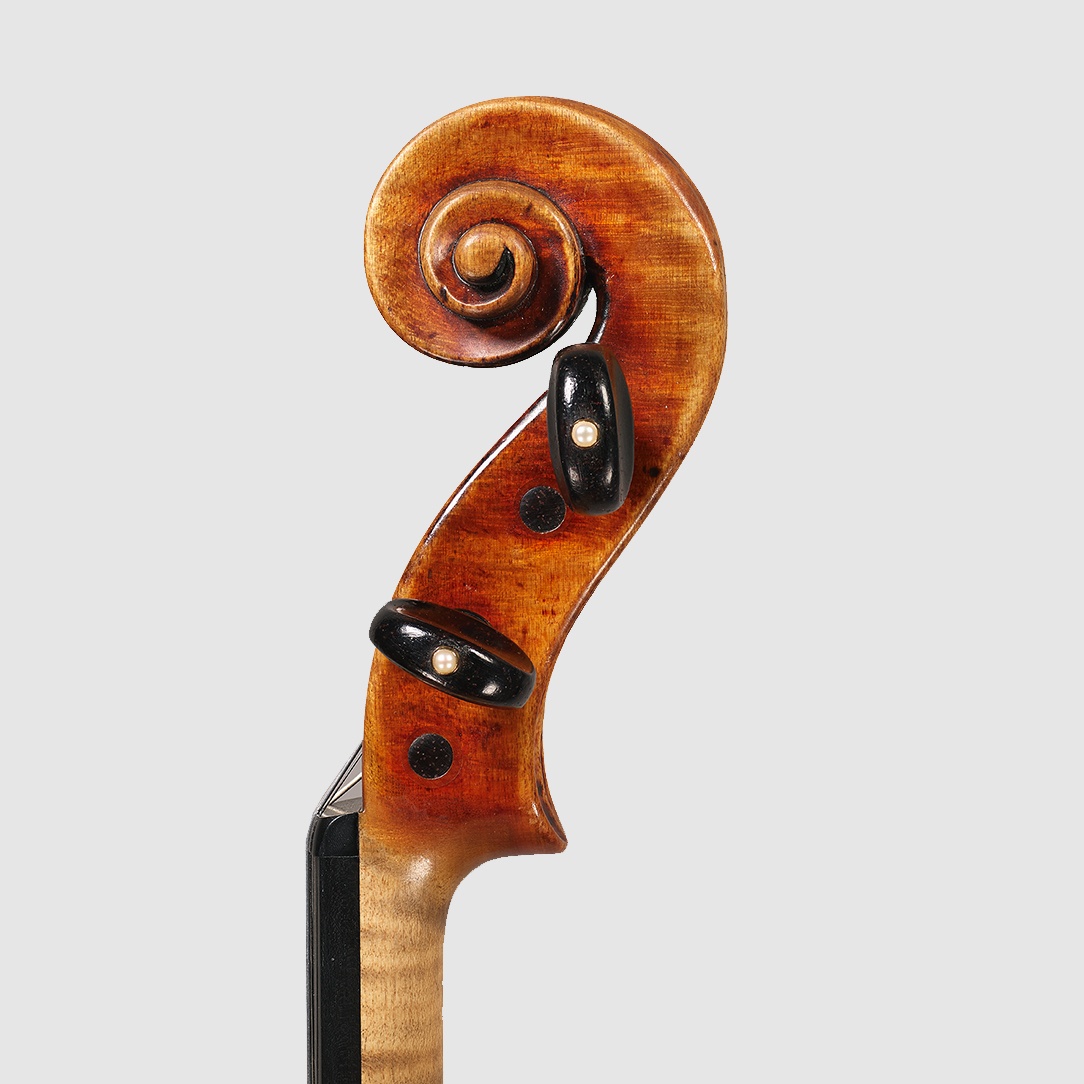
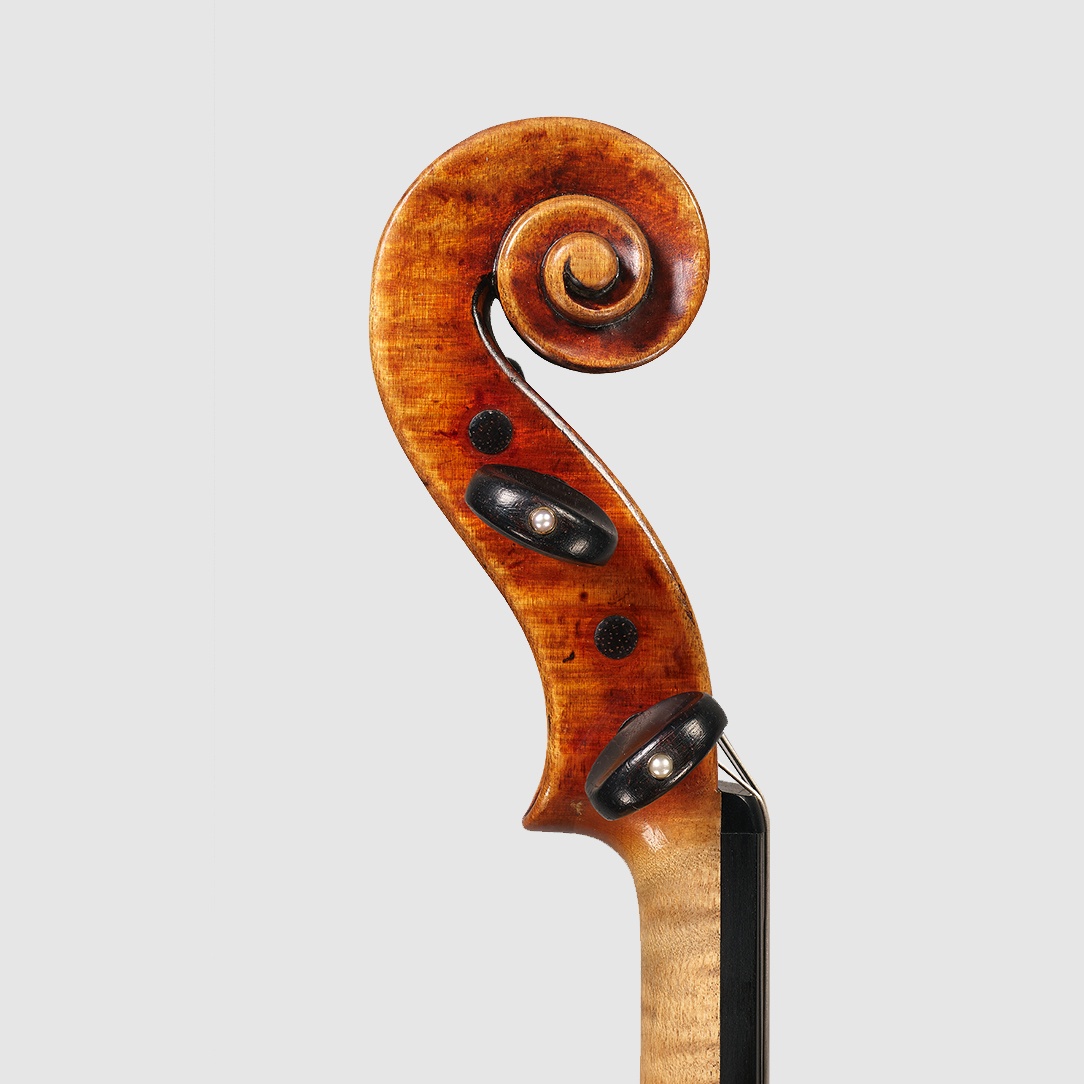
It is worth pausing here to say something about the physical object at the centre of all this history. The de Chaponay comes from what experts consider the late Golden Period of Stradivari’s work, and it shows. The back is carved from a single piece of beautifully flamed maple, the grain descending in a deeply marked, regular pattern from left to right. The varnish, a deep golden-orange, has survived nearly three centuries almost entirely intact. For context, the closest comparison is the celebrated 1721 Lady Blunt, widely regarded as one of the best-preserved Stradivaris in existence. To be mentioned in the same breath is no small thing.
Very little has been altered or restored. The neck is new, as is common with instruments of this age, but even here the evidence of the original remains: three small nail holes, still visible in the upper block, mark exactly where Stradivari’s own neck was fixed. Inside, the linings are neatly morticed into the willow corner blocks, undisturbed, just as he left them.
That level of preservation does not happen by accident. It is the result of three centuries of careful, attentive ownership, and it tells you as much about the people who held this instrument as any document could.
Today
The de Chaponay now forms part of one of the largest private collections in the world. It is not kept behind glass. It is currently being played by artists including Janine Jansen and Nicola Benedetti, travelling across continents and reaching new audiences in concert halls its previous owners could never have imagined.
The varnish that Stradivari applied in 1722 is still there. Whatever else has changed, that hasn’t.
Step beyond the "De Chaponay"
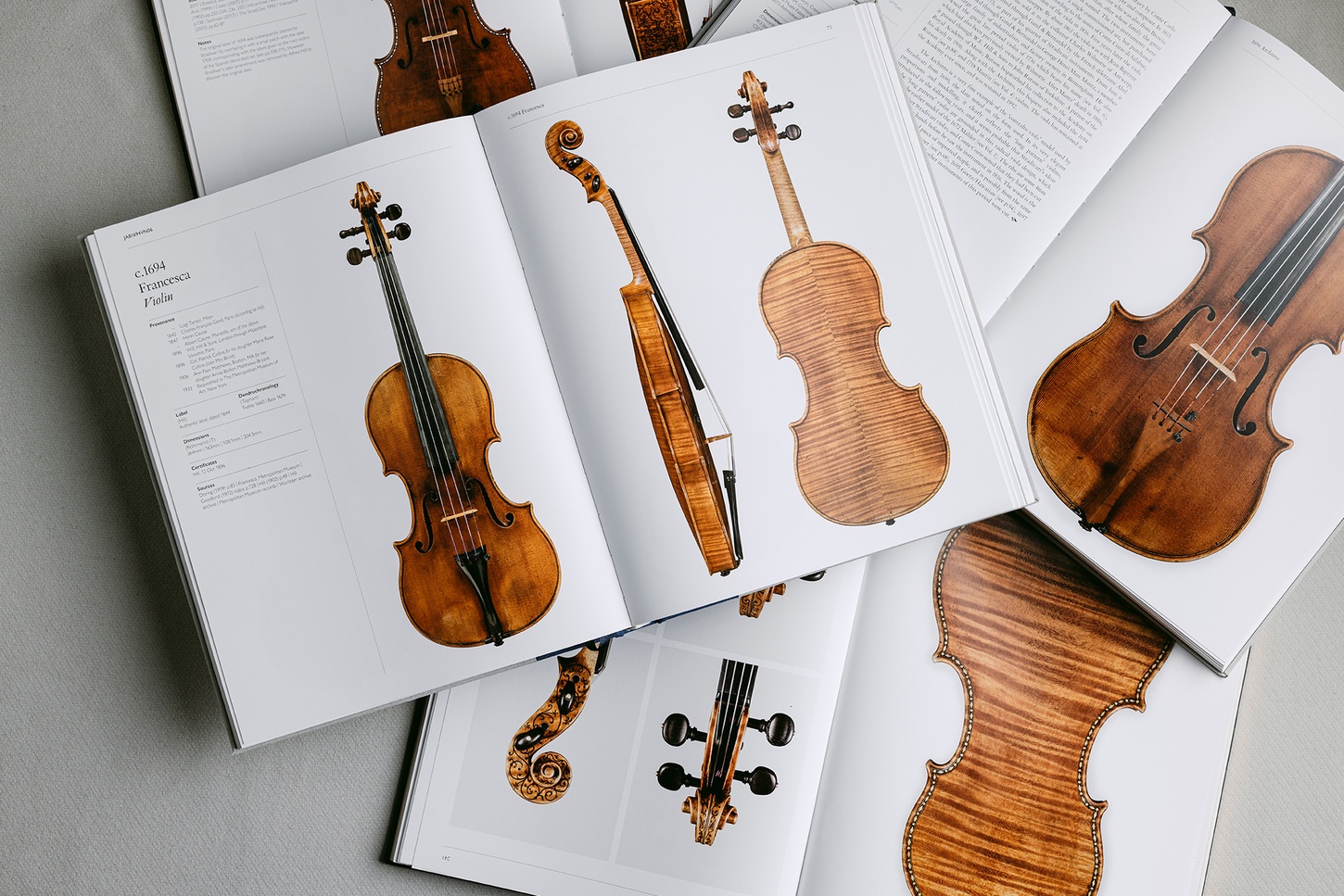
Antonio Stradivari: The Complete Works
This level of expertise is no accident: J & A Beare is uniquely able to combine in-house knowledge with privileged archival access, international connections and high-quality imagery.
An additional decade of research has come together in Antonio Stradivari: The Complete Works, our six-volume publication detailing all known Stradivari instruments in unprecedented detail.